The 3 Biggest Decisions That Drive LED Wall Cost (and How to Choose Wisely)
Buying an LED wall can feel like drinking from a firehose—spec sheets, millimeters, mysterious acronyms, and prices that escalate fast. The good news? Most of the cost comes down to just a few key decisions.
Let’s break them down in plain English.
1. The #1 Cost Driver:
Pixel Pitch
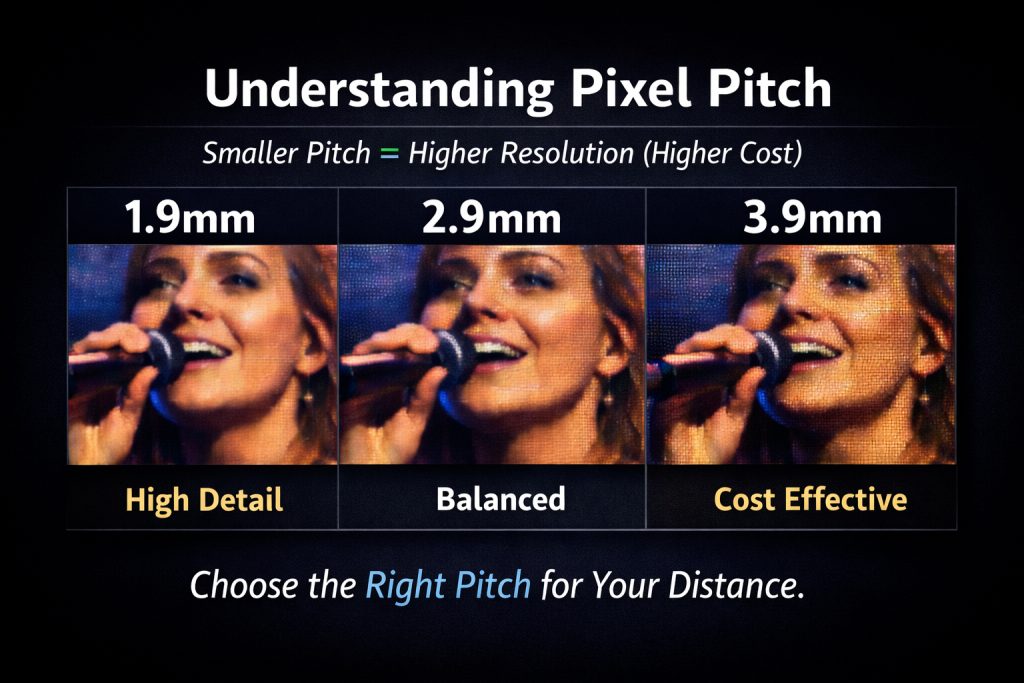
What is Pixel Pitch?
Pixel pitch is the distance (in millimeters) between each LED pixel cluster.
Think of pixel pitch like camera megapixels—but for distance. The closer people are to the screen, the more resolution they’ll notice.
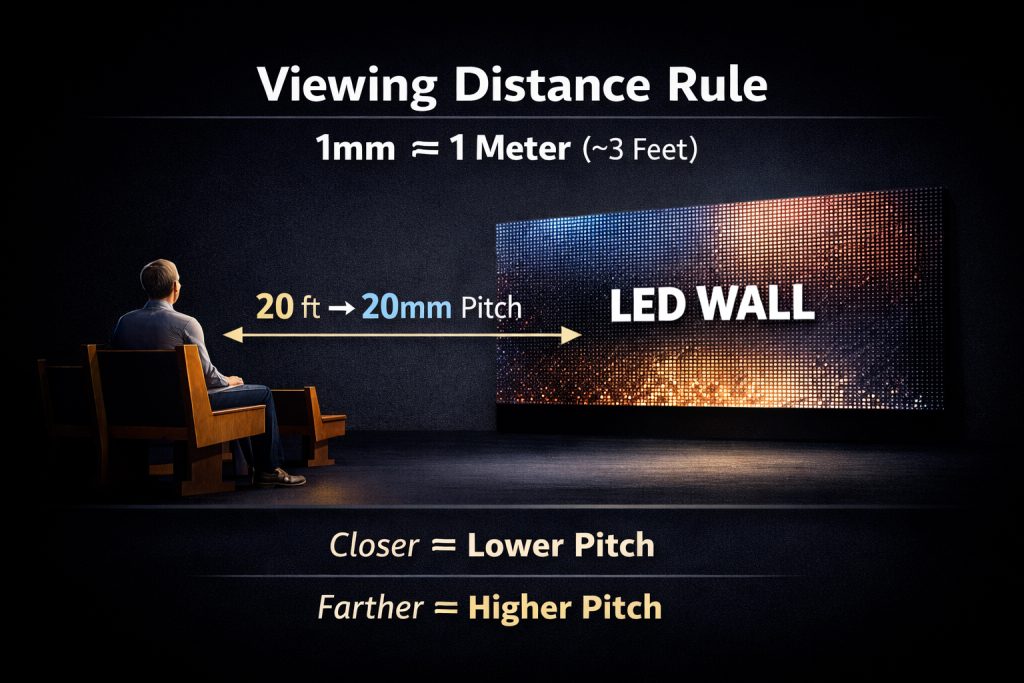
A simple rule of thumb:
1mm of pixel pitch for every 1 meter (≈3 feet) of viewing distance
So if your front row is 25–30 feet away, you do not need a 1.5mm wall. That’s like buying a cinema camera to shoot PowerPoint slides.
For most churches and mid-sized venues:
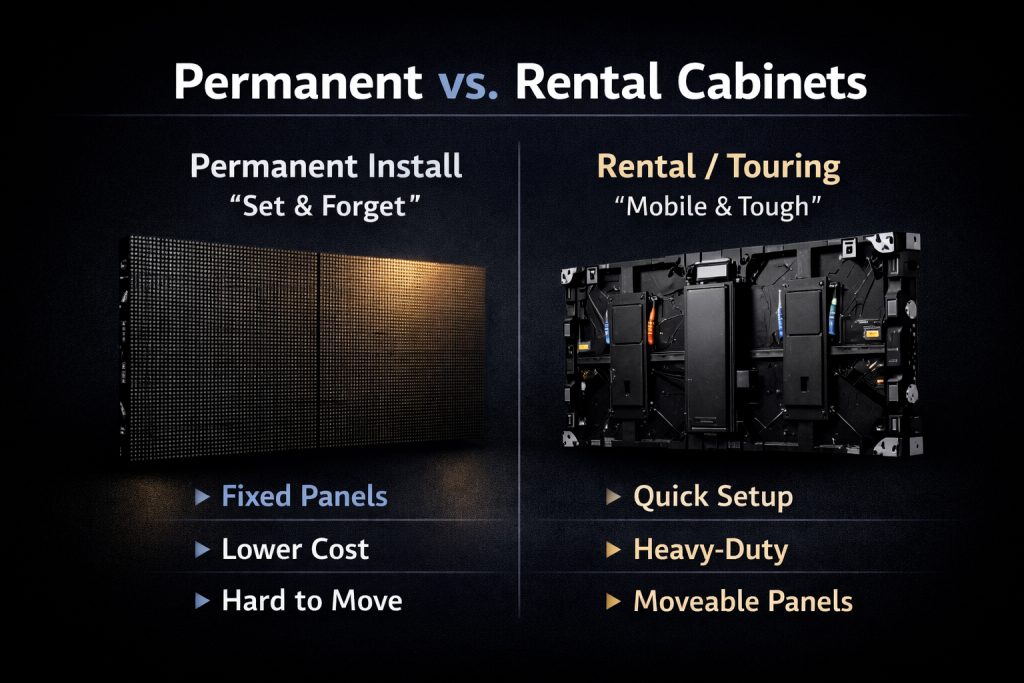
2. Permanent Install vs. Mobile (Rental) Cabinets
This decision isn’t about quality—it’s about how often you move the wall.
Permanent Install Panels
Best for churches with a fixed stage design.
Designed to be installed once and left alone
Generally more affordable
Cleaner look once mounted
Not fun to move (or reconfigure later)
Perfect if: Your stage rarely changes and the wall is part of the architecture.
Rental / Touring Panels
Built for abuse. Literally.
Heavy-duty frames and corners
Locking pins for fast assembly
Designed for constant setup and teardown
Usually cost more
Perfect if:
You’re a mobile church
You reconfigure stages often
The wall travels or gets struck weekly
Buying permanent panels for a mobile setup is like using studio monitors as road gear. You can do it… once.
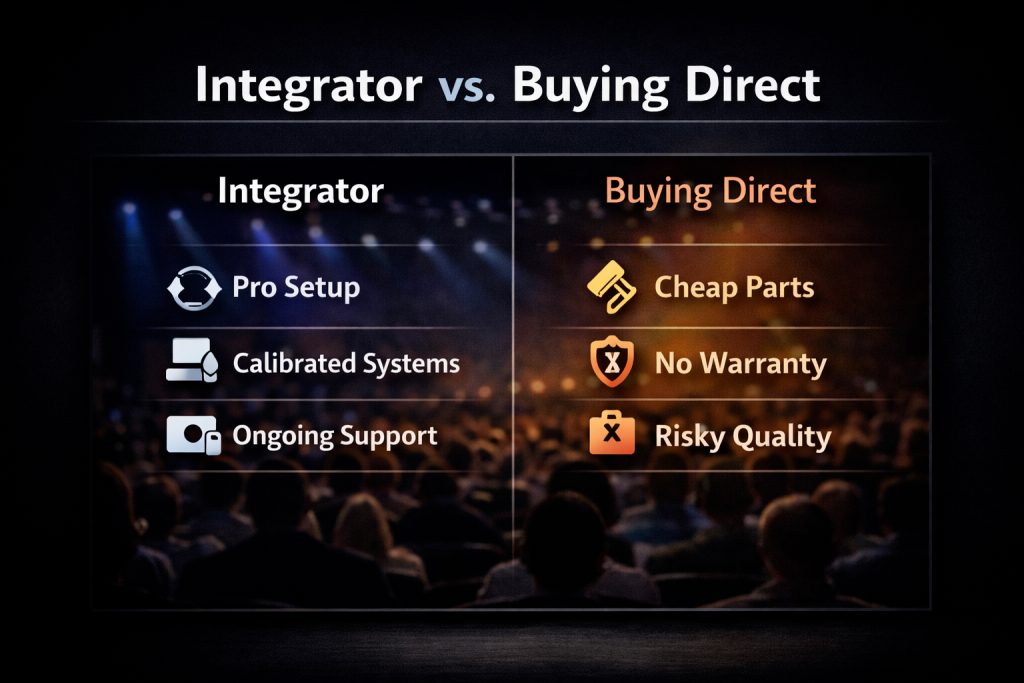
3. Buying Direct vs. Using an Integrator (This One Matters)
The Temptation of Buying Direct
Buying straight from overseas manufacturers can look appealing:
Lower upfront cost
Big spec numbers
Fancy PDFs
But here’s the risk:
Overdriven LED chips (brighter… until they die early)
Inconsistent color between panels
Cheap power supplies
Zero help when something fails on a Saturday night
And spoiler alert: something will fail eventually.
Why Integrators Earn Their Keep
A good integrator—especially one that understands worship environments—handles:
Power and signal calculations
Processor configuration
Color calibration
Spares strategy
Warranty and support
As one technician put it perfectly:
“There are way too many variables for me to feel remotely comfortable doing it myself.”
That’s wisdom, not weakness.
Bottom Line
Pixel pitch drives cost more than anything else
Match the panel type to how you actually use the wall
Support matters more than saving a few thousand dollars upfront
An LED wall should serve the message—not become a weekly technical headache.

Jesse Maitland is a leader in using technology to build your personal, professional or organizations impact and influence with media. Jesse has worked in broadcasting in television and online creating real impact for millions of people by partnering with his clients to discover and strategize your true passions and purpose. His greatest joy is helping his clients to discover the bigger purpose and monetizing it for the greatest possible impact. He is always willing to ask questions, inspire, educate and build your confidence.
Click edit button to change this text. Lorem ipsum dolor sit amet, consectetur adipiscing elit